Strategic Investment in AI: Lessons for GCC Enterprises from Tesla's Bold Pivot
Tesla's significant capital expenditure increase for AI and robotics offers a critical lesson for GCC enterprises on strategic long-term investment over short-term financial metrics. This article explores how a proactive, vision-driven approach to AI can secure future competitiveness and market leadership in the region.
The Imperative of Visionary Investment
In an era frequently characterised by cautious fiscal management and a focus on immediate returns, Tesla's recent announcement to triple its capital spending to an unprecedented $25 billion by 2026 presents a compelling counter-narrative. This substantial commitment, directed primarily towards artificial intelligence (AI) and robotics, signals a profound strategic pivot. For Chief Executive Officers, Chief Operating Officers, and Chief Information Officers across the GCC, this move is not merely an interesting industry development; it is a powerful case study in the strategic imperative of visionary investment, even when it pressures short-term financial metrics.
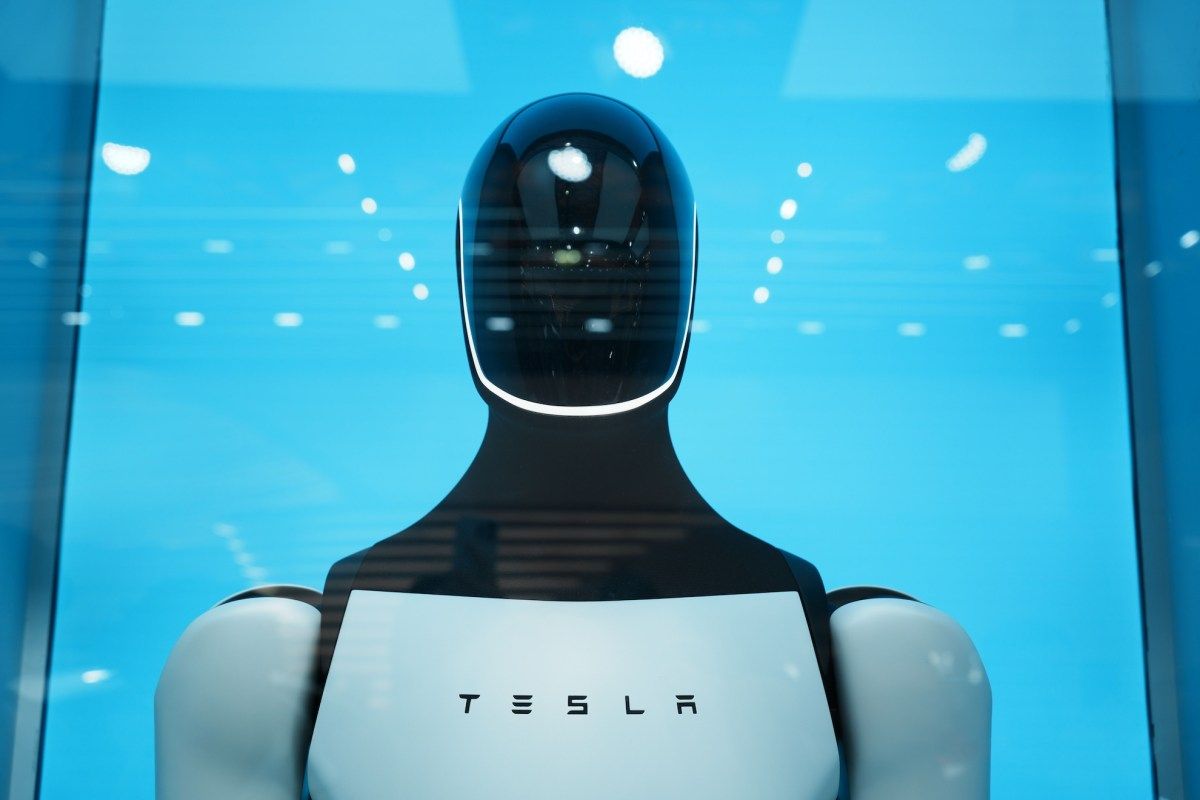
Tesla's decision to expand investments in compute infrastructure, chip design, manufacturing, and ambitious programmes like Robotaxi and Optimus, despite anticipating negative free cash flow, underscores a belief in the long-term value creation potential of AI. This is a crucial distinction for GCC enterprises currently weighing the balance between immediate profitability and future market positioning. The Gulf region, with its ambitious national visions and rapid economic diversification programmes, is uniquely positioned to learn from such bold strategic plays.
Beyond Incremental Gains: The Scale of AI Ambition
The sheer scale of Tesla's planned investment – jumping from $8.5 billion in 2025 to $25 billion in 2026 – highlights a recognition that achieving true AI leadership requires more than incremental adjustments. It necessitates a fundamental re-evaluation of capital allocation and a willingness to commit significant resources to foundational capabilities. This includes substantial funding for new data centres, a semiconductor fabrication plant in Austin, and advanced robot production lines.
For GCC enterprises, this translates into a critical question: are our current AI investment strategies commensurate with our long-term aspirations? Many organisations in the region are exploring AI, often through pilot programmes or focused departmental initiatives. While valuable, these efforts may not be sufficient to build the comprehensive AI infrastructure and capabilities required to compete on a global scale or to fully realise the transformative potential within sectors such as energy, logistics, finance, and smart cities – areas where the GCC aims for global leadership.
The Strategic Rationale: Building Future Competitive Advantage
Tesla's CFO, Vaibhav Taneja, acknowledges that this aggressive push will drive negative free cash flow later in 2026. This candid admission is vital. It demonstrates a strategic acceptance of short-term financial pressure in favour of securing a dominant position in emerging, high-growth markets. The underlying assumption is that these investments will ultimately yield substantial returns through new revenue streams, enhanced operational efficiencies, and a strengthened competitive moat.
GCC enterprises must similarly consider the strategic rationale behind their AI investments. Is the goal merely to optimise existing processes, or is it to fundamentally redefine business models, create new products and services, and establish new market categories? The latter often requires a 'build-first, monetise later' approach, where the initial outlay is significant, but the long-term rewards are potentially exponential. This aligns closely with the long-term, strategic planning horizons often adopted by sovereign wealth funds and national development programmes within the GCC.
Operationalising AI at Scale: Key Investment Areas
Tesla's investment breakdown offers a practical guide to the critical components of a large-scale AI strategy:
* **Compute Infrastructure:** The foundation of any advanced AI system. Investing in robust, scalable computing power – whether cloud-based or on-premise – is non-negotiable for processing vast datasets and training complex models. GCC entities handling large volumes of data, from smart city sensor networks to national digital identity programmes, require this bedrock.
* **Chip Design:** Moving beyond off-the-shelf solutions to custom-designed silicon can provide significant performance advantages and cost efficiencies at scale. While a semiconductor fab might be a bridge too far for many, investing in AI-optimised hardware or partnering with specialised providers is a viable alternative for the region.
* **Manufacturing and Production Lines:** For robotics and physical AI applications, the ability to manufacture at scale is crucial. This is particularly relevant for the GCC's burgeoning industrial and manufacturing sectors, where automation and robotics are key to diversification and productivity gains.
* **Research and Development (R&D) Programmes:** Dedicated programmes like Robotaxi and Optimus represent significant R&D commitments. GCC enterprises should foster internal R&D capabilities or establish strategic partnerships with leading AI research institutions to drive innovation tailored to regional needs and opportunities.
Mitigating Risks and Maximising Returns in the GCC Context
While Tesla's approach is instructive, GCC enterprises operate within a unique context. The availability of capital, government support for strategic industries, and a growing talent pool present distinct advantages. However, challenges such as talent acquisition, data governance, and ethical AI considerations must be carefully managed.
To mitigate risks and maximise returns from substantial AI investments, GCC leaders should consider:
* **Clear Vision and Strategy:** Define precisely what AI will achieve for the organisation and align it with broader national economic objectives.
* **Phased Implementation with Scalability in Mind:** While the overall vision is bold, implementation can be phased, ensuring each stage builds towards the larger goal and allows for learning and adaptation.
* **Talent Development and Acquisition:** Invest heavily in upskilling existing workforces and attracting global AI talent to the region.
* **Ecosystem Collaboration:** Foster partnerships with technology providers, academic institutions, and even competitors to share knowledge and resources.
* **Robust Governance and Ethics Frameworks:** Establish clear guidelines for responsible AI development and deployment to build trust and ensure compliance.
Partner with NUSRV
Navigating the complexities of large-scale AI investment requires deep expertise and a clear strategic roadmap. NUSRV specialises in guiding GCC enterprises through these transformative journeys, from developing comprehensive AI strategies to overseeing implementation and ensuring measurable business outcomes. Our team of senior strategists understands the unique opportunities and challenges within the Gulf region, helping you make informed decisions that secure your competitive advantage and drive sustainable growth. Contact NUSRV today to discuss how we can help your organisation make its bold AI pivot a resounding success.
Ready to Apply This to Your Business?
Book a 30-minute strategy call. We'll take the thinking in this article and apply it directly to your workflows and business context.